
The Architect’s Blueprint :
What to Consider Before Investing in Premium Home Automation ?
True luxury home automation is invisible, intuitive, and centralized. It is an ecosystem where your circadian lighting, climate control, multi-room audio, architectural shading, and high-end security operate as a single, cohesive intelligence.
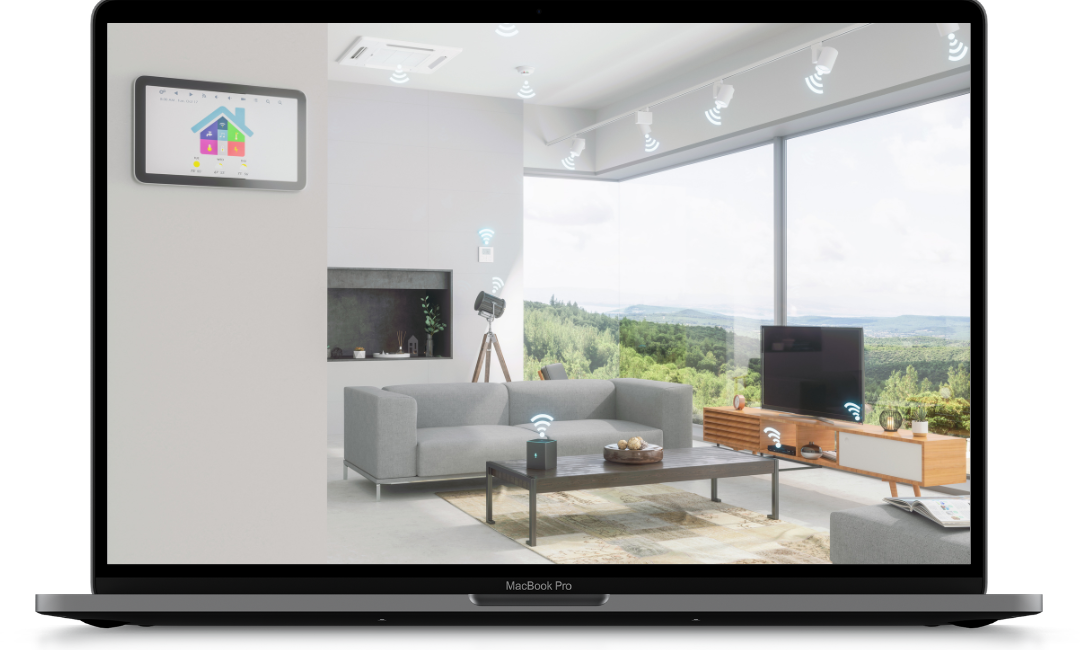
There is a vast difference between a “smart home” and a premium home automation ecosystem.
Buying a handful of smart plugs, wireless bulbs, and a couple of voice-controlled speakers from an e-commerce site creates a connected home—but it also creates a fragmented experience with a dozen different apps that do not talk to each other.
If you are constructing a new villa, renovating a premium apartment, or upgrading your current residence, here are the critical factors you must consider to ensure your investment delivers a flawless, future-ready luxury lifestyle.
1. Centralized vs. Fragmented Ecosystems (The Unified Interface)
The hallmark of a premium setup is unification. You should never have to jump from a lighting app to a separate climate app just to set the mood for a movie.
Luxury automation systems use a centralized controller—a robust hardware hub hidden away in a dedicated data rack—running sophisticated operating systems like Crestron, Control4, or Savant.
Whether you are using an in-wall touch panel, a premium handheld remote, or your smartphone, the user experience remains identical and friction-free.

3. High-Fidelity Audio-Visual (AV) Distribution
A premium smart home treats entertainment as an integrated architectural element, not an afterthought.
-
Matrix Switchers: Instead of placing a clutter of media boxes, streaming sticks, and Blu-ray players beneath every television, premium automation routes all video through a centralized matrix switcher in your data closet. A single Apple TV or media server can be viewed seamlessly on any display in the house.
-
Architectural Audio: True luxury audio relies on multi-zone amplifiers paired with high-end, flush-mounted, or completely invisible in-wall speakers (from brands like Bowers & Wilkins, Sonance, or Bang & Olufsen). Your music follows you from the living room to the patio, perfectly synced, without a single visible wire or bulky cabinet box.
4. Invisible Aesthetics & Architectural Shading
In a luxury home, technology should support the space without dominating it visually. “Invisible technology” is the modern standard of luxury.
Instead of cluttered banks of plastic switches on your Italian marble walls, premium automation utilizes minimalist, elegant keypads.
The Power of Motorized Shading: Automated blinds and draperies do more than block the sun. Premium quiet-motor shading systems (such as Lutron Sivoia) align perfectly across windows with millimeter precision. They sync automatically with astronomical clocks to lower during peak heat hours—protecting your fine art and interior upholstery from UV damage while optimizing your HVAC system’s energy efficiency.
2. Infrastructure: Wired vs. Wireless
One of the earliest and most impactful decisions you will make is choosing the underlying architecture of your system.
Wired (The Gold Standard): If you are building a new home or going through a deep renovation down to the brickwork, a wired automation backbone (using protocols like KNX or proprietary premium busses) is unmatched. Because commands travel through physical cables hidden in your walls, there is zero latency, zero wireless interference, and absolute stability—even in expansive properties spanning thousands of square feet.
Wireless (The Flexible Standard): If you want to automate without breaking down walls, premium wireless systems or modern retrofits utilizing robust protocols like Matter, Zigbee, or Z-Wave are incredibly advanced. They use “mesh networking,” meaning every smart switch or dimmer acts as a repeater, strengthening the signal across your home.
5. Network Architecture: The Invisible Foundation
The most common point of failure in any smart home is a weak network. A standard router provided by your internet service provider cannot handle the traffic of a premium automation system, which may feature over 100 connected devices, high-definition security cameras, and high-res audio streaming.
An enterprise-grade network backbone is an absolute prerequisite. This includes:
-
A dedicated, wired firewall and network switch.
-
Professionally mapped, ceiling-mounted Wireless Access Points (WAPs) configured to provide seamless roaming so your device never drops connection as you move between floors.
-
A dedicated Virtual Local Area Network (VLAN) to isolate your smart home devices from guest Wi-Fi traffic, guaranteeing both lightning-fast speed and bulletproof digital security.

Choosing a System Integrator
A premium home automation system is only as good as the professional who programs it. Unlike consumer electronics, luxury systems are bespoke, tailor-made solutions that require a skilled System Integrator who collaborates directly with your interior designer, architect, and electrical contractor from day one. Look for an integrator who provides robust after-sales support and preventive remote monitoring to keep your ecosystem running perfectly for years to come.
Why Automate Your Home
Automating a house isn't just about the "cool factor" of turning off lights with your voice anymore; it's about fundamentally changing how your living space manages itself. When done right, home automation handles the tedious, repetitive micro-tasks of daily life,...
Blogs
BlogsIpsum, gypsum calibrate high-end private screening rooms. By combining world-class acoustic physics with legendary audiophile brands, we bring absolute cinematic perfection ipsum gypsum.